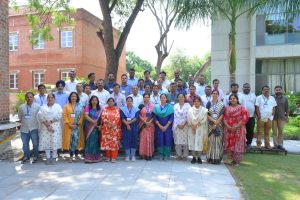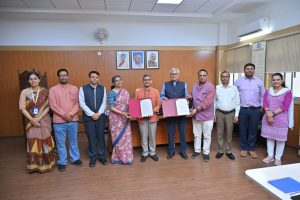
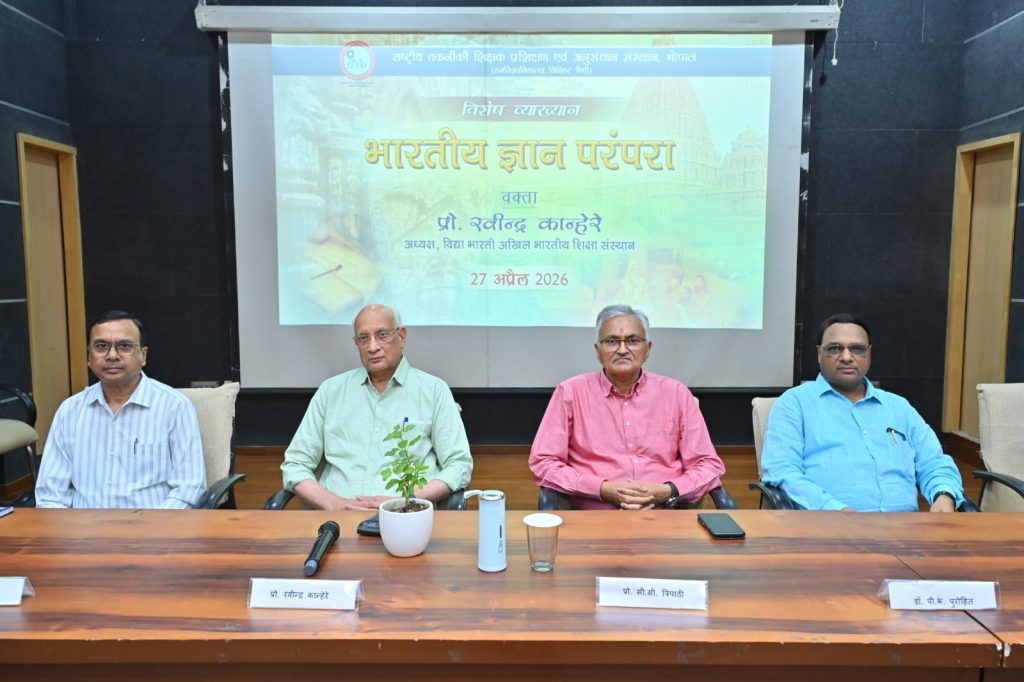
Bhopal: NITTTR Bhopal organized a grand and intellectually vibrant programme on Indian Knowledge Traditions, bringing together academicians and educators from across the country to deliberate on Indian educational philosophy, national consciousness, and cultural values. The event highlighted the contemporary relevance of India’s rich knowledge systems and their meaningful integration into modern education.
Delivering the keynote address at the inaugural session, Dr Ravindra Kanhere, President, Vidya Bharati Akhil Bharatiya Shiksha Sansthan, emphasised that education in the Indian tradition has always been regarded as a societal responsibility rather than merely a function of the state. He underlined that Indian educational philosophy goes beyond knowledge acquisition and is intrinsically linked with character building and social responsibility. Elaborating on the concept of Panchakoshiya Shiksha, he explained the four categories of learners—those who listen, understand, practice, and disseminate knowledge.
Addressing the second session, Nikhilesh Maheshwari, Organising Secretary, Vidya Bharati, Madhya Bharat reflected on the spirit of the national movement through the historical journey of Vande Mataram. He described it as not merely a song, but a profound symbol of India’s self-respect and enduring spiritual consciousness.
Presiding over the programme, Dr. C.C. Tripathi, Director, NITTTR Bhopal, said the training initiative aims to sensitize teachers towards Indian culture and traditions while providing a framework for integrating Indian Knowledge Traditions into contemporary pedagogical practices.
Speaking on the occasion, Prof. P.K. Purohit, Dean of Science and Head, Department of Indian Knowledge Systems (IKS), observed that Indian knowledge traditions are not only a part of the nation’s heritage but also continue to offer valuable guidance in present-day disciplines such as science, technology, and the humanities.
The programme was conducted by Dr. Amit Dubey, while the vote of thanks was proposed by Dr. Ramendra Singh. With enthusiastic participation from teachers representing different parts of the country, the event effectively reinforced the national vision of education rooted in Indian knowledge traditions and cultural ethos.