
Sunil Goyal
The rapid adoption of digital gate-management systems in India’s housing societies has brought convenience but also a growing wave of privacy anxieties particularly surrounding the widely used MyGate app. Though MyGate has not faced a publicly confirmed large-scale hacking event, the platform’s massive data collection, app-dependent approval system and past allegations of data misuse have raised serious concerns among residents, cybersecurity observers and civil-society groups.
For professionals working in sensitive and high-risk roles including judges, police officers, journalists, defence personnel, bureaucrats, national intelligence and other government functionaries these concerns translate directly into personal safety risks.
The platform gathers extensive information, visitor logs, domestic staff details, vehicle numbers, flat information and even lifestyle patterns via integrations with delivery apps like Swiggy, Zomato and Dunzo. This creates detailed behavioural profiles showing when residents are home or away, who visits them, how frequently they order food and what kind of household support they use.
If such data were ever leaked, sold or accessed improperly, it could enable targeted surveillance, blackmail, stalking or burglary. Privacy experts warn that individuals in sensitive professions are especially vulnerable, as exposure of their personal movements or visitor interactions can aid adversaries, criminals and hostile actors.
Concerns escalated after real-world incidents involving MyGate came to light. In 2020, MyGate and its competitor NoBroker filed police complaints accusing each other of stealing customer data, including confidential contact details of residential committees.
Such allegations, even without a large hacker breach, demonstrate risks of internal misuse, corporate espionage and unauthorized access to resident information. MyGate has also publicly warned its users about fraudulent companies impersonating MyGate staff and attempting to collect resident data by offering freebies or incentives and incident that highlights how easily personal data can be targeted or exploited.
Additionally, residents have reported automatic data-sharing with delivery partners, visitor logs being retained longer than necessary /and instances of misconfigured approvals appearing even without direct gate verification.
Equally troubling is the gradual phasing out of the traditional manual telecom system.
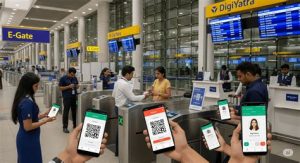
Earlier, guards phoned residents directly to confirm visitor entry, leaving no digital footprint and storing no personal behaviour data. The shift to a fully app-based mechanism centralizes all activity into a single digital database, creating a high-value target for anyone seeking sensitive information.
For ordinary residents this is a privacy concern but for judges handling criminal cases, police officers investigating gangs, journalists working on sensitive stories or administrators involved in enforcement duties, this can become a direct threat to life and security.
MyGate maintains that it follows strict security standards, including ISO 27001 compliance, GDPR-style controls, and regular vulnerability testing. It states that Resident Welfare Associations are the custodians of the data with MyGate serving only as an intermediary. However, experts note that India’s enforcement mechanisms for data-protection remain weak, leaving residents with limited recourse in cases of over-collection, misuse or unauthorized access.
As societies adopt MyGate, the larger debate becomes one of safety versus convenience. Digital gatekeeping may streamline entry but without strong governance, data minimization and the continued option of manual telecom verification, it risks creating more problems than it solves. For communities that include government officers, security personnel, judicial staff or journalists, the stakes are far higher. In a landscape where even alleged corporate data theft between competitors has occurred, residents are increasingly asking whether a system designed for security might be exposing them to new vulnerabilities.