
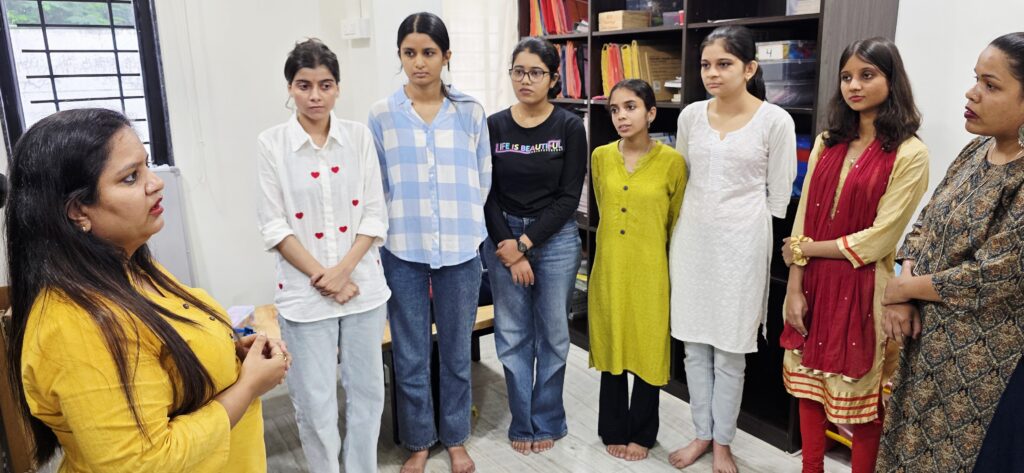
In a world that is quick to label and slow to listen, understanding neuro-diversity has become more important than ever. Dr. Vini Jhariya, a well-known Clinical and Child Psychologist and Director of Urjasvini Special School in Indore, is on a mission to change how we perceive, support, and celebrate children who think and learn differently.
“Neuro-diverse children—those with conditions like ADHD, Autism Spectrum Disorder, or Learning Disabilities—are not broken. They are simply wired differently,” says Dr. Jhariya. “With the right environment and timely support, these children can thrive in ways we never imagined.”
Referencing the iconic film Taare Zameen Par, she explains how media can sometimes act as a mirror for societal change. “That film was more than entertainment—it was a wake-up call. It showed us that behind every ‘problem child’ may be an undiscovered artist, thinker, or dreamer. What they need is not correction, but connection.”
The Need to Shift from Judgment to Understanding
Despite growing awareness, many children continue to suffer silently in classrooms and homes that expect conformity over curiosity. Dr. Jhariya emphasizes that the pressure to “fit in” can damage a child’s self-esteem and emotional well-being.
We must ask ourselves: Are we creating an environment where every child feels seen, heard, and valued? Or are we simply rewarding those who can memorize and perform?
Through her years of experience at Urjasvini Child Development Center, Dr. Jhariya has worked with thousands of families across Madhya Pradesh. She firmly believes that early identification, parental awareness, and inclusive teaching methods can transform a child’s developmental path.
Messages for Parents and Educators
Empathy is more powerful than punishment.
Children respond better to compassion than criticism. Build bridges, not walls.
Celebrate progress, not perfection.
Whether it’s tying shoelaces or reciting a poem, every milestone counts.
There is no single definition of being ‘normal’.
Each brain is unique. The goal should be growth, not comparison.
Understand first, respond later.
Behaviour is a form of communication. What we label as ‘tantrum’ may be a cry for help.
Children bloom at different speeds.
Just because a flower blooms later doesn’t mean it’s any less beautiful.
Early intervention is a game changer. The earlier we address developmental challenges, the greater the chances of success in academics, social life, and emotional regulation.
Let children explore beyond books. Give them equal encouragement in sports, music, art, drama, and play—the true playgrounds of imagination and confidence.
When we change how we look at a child, the child begins to change. Neuro-diverse children are not the exception—they are a part of our shared future. A future that must include inclusion, compassion, and possibility.
“Let’s build a society that doesn’t just accommodate differences, but appreciates them. Let’s raise children who aren’t afraid to be different, because they were loved exactly as they are.”