Bhopal: The State Handloom Expo 2026 commenced on Monday at Gauhar Mahal, Bhopal. Running until May 10, this prestigious event aims to bring traditional weaving arts from across the country onto a single platform and to connect artisans directly with consumers.
The expo has been organized by the Sant Ravidas Madhya Pradesh Handicrafts and Handloom Development Corporation, in collaboration with the Development Commissioner (Handlooms) under the Ministry of Textiles, Government of India.
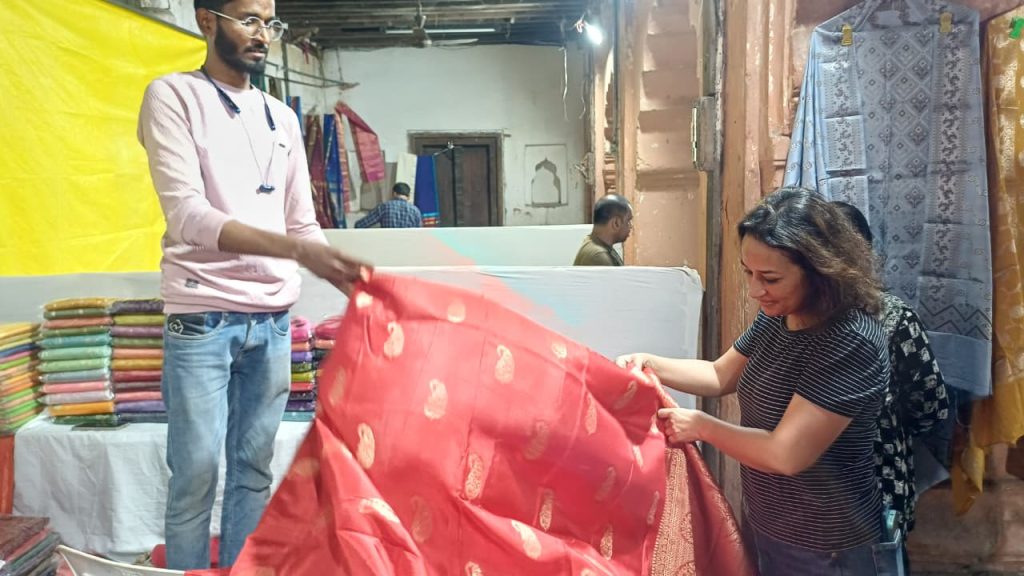
Visitors can witness the exquisite craftsmanship of handmade textile
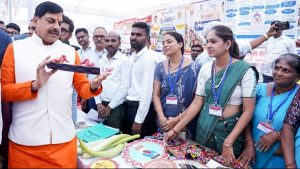
More than 60 weavers from 10 states across the country are showcasing their skills at this expo. Alongside Madhya Pradesh’s renowned Chanderi and Maheshwari sarees, attractions at the venue include Bihar’s Bhagalpuri silk, Uttar Pradesh’s Banarasi textiles, West Bengal’s intricate weaves, the traditional Ikat styles of Andhra Pradesh and Odisha, the tribal art of Jharkhand, and designer handloom products from Delhi. At every stall, visitors can witness the exquisite craftsmanship of handmade textiles, the use of natural dyes, and glimpses of traditional weaving techniques.
Minister Interacts with Artisans and Offers Praise
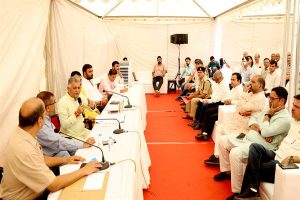
The expo was inaugurated in the presence of Minister for Cottage and Village Industries, Dilip Jaiswal, who served as the Chief Guest. While interacting with the artisans, he lauded their products and remarked that such events not only preserve traditional art forms but also serve to economically empower the artisans.
He further highlighted that the state government is continuously striving to provide market access to artisans and to help their products gain national and international recognition. A large number of officials, employees, and art enthusiasts were present on this occasion, including Assistant Manager Surendra Verma, Manager Ranjana Ninave, Assistant Manager Milind Mendi, Deputy Director (Handlooms) Umesh Srivastava, Expo In-charge Arvind Sharma, and Mentor M.L. Sharma.
What Makes This Expo Special
The sheer diversity of the products displayed at the expo is what truly sets it apart. In addition to sarees, a wide array of attractive products—including dupattas, stoles, kurta pieces, bedsheets, cushion covers, and various home decor items—are available here.
Being handcrafted, every item possesses a unique identity of its own, offering customers a truly special experience. Many of these products utilize eco-friendly materials, representing a positive step towards sustainable development.
Such expos play a pivotal role in realizing the vision of an ‘Atmanirbhar Bharat’ (Self-Reliant India). This platform liberates artisans from the clutches of middlemen by connecting them directly with customers, thereby boosting their income and inspiring them to further their traditional crafts. This also serves to strengthen the rural economy.
The contribution of artisans is equally significant in the development of a ‘Viksit Madhya Pradesh’ (Developed Madhya Pradesh). The state’s traditional weaving arts not only reinforce its cultural identity but also generate employment opportunities.