Madhya Pradesh CM Dr. Mohan Yadav stated that water is a precious gift of nature and conserving it is a collective responsibility. He said that with the objective of meeting water-related needs and safeguarding water resources for future generations, the state government is once again launching the Jal Ganga Samvardhan Abhiyan on a large scale.
On the auspicious occasion of the Indian New Year (Nav Varsh Pratipada / Gudi Padwa), the state-level campaign will be launched on March 19 from the banks of the Kshipra River in Ujjain. The campaign will continue until June 30. He said that water conservation must be transformed into a social movement. With the participation of citizens, panchayats, voluntary organisations, and various government departments, the campaign will set a new example of water conservation in Madhya Pradesh.
Initiative to Turn Water Conservation into a People’s Movement
Dr. Yadav said that the tradition of water conservation in Madhya Pradesh is centuries old. In ancient times, ponds, wells and stepwells were not merely sources of water but also centers of social life. The government is now working to revive this tradition through modern technology and public participation.
CM stated that the objective of the Jal Ganga Samvardhan Abhiyan is not only to create new water structures but also to promote a culture of water conservation throughout the state. Through the campaign, people in villages will be made aware that rainwater harvesting, groundwater recharge and protection of water sources are essential for both life and development.
Public Participation is the Greatest Strength of the Campaign
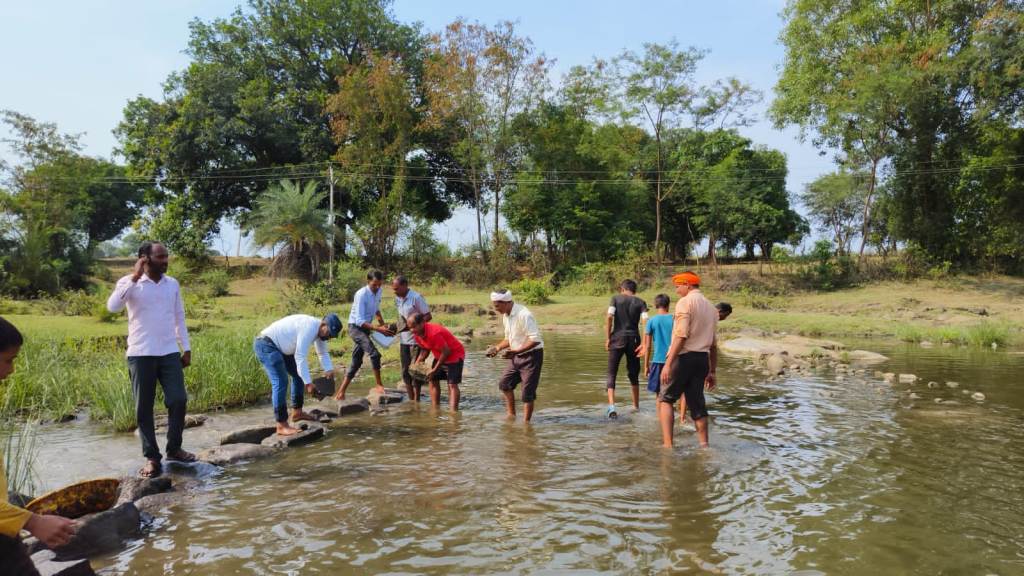
CM Dr. Mohan Yadav said that public participation is the greatest strength of the Jal Ganga Samvardhan Abhiyan. He appealed to all citizens of the state to actively participate in this large-scale initiative for water conservation. He urged people to contribute through voluntary labour (shramdaan) for cleaning ponds and wells in villages, adopt rainwater harvesting measures in their homes, and maintain cleanliness around water sources. He said that if society and the government work together, Madhya Pradesh can become a water-rich state.
The campaign will not only promote water conservation but will also yield long-term environmental and economic benefits. It will help improve groundwater levels, provide more irrigation water to farmers, offer relief to areas affected by water scarcity and low rainfall, strengthen environmental conservation, and support the rural economy. It will also ensure better water management for the future.
In view of climate change and irregular rainfall, effective water management has become one of the most pressing needs of our time. The Madhya Pradesh government’s campaign is a significant step in this direction.
Over 2.79 Lakh Water Structures Built in the First Phase
CM Dr. Mohan Yadav informed that the first phase of the Jal Ganga Samvardhan Abhiyan was launched in 2024. Historic work was undertaken in the field of water conservation during this phase. More than 2.79 lakh water structures were constructed or revived. These included the construction and rejuvenation of ponds, repair of wells and stepwells, canal construction, revival of dried rivers and other water conservation structures. As a result, groundwater levels improved in many areas of the state, and farmers received additional water for irrigation.
Rapid Progress in the Second Phase
Extensive work was also carried out during the second phase of the campaign in 2025. In this phase, the construction of more than 72,647 water structures has already been completed across the state. In addition, 64,395 water structures are currently under construction.
These works include farm ponds, check dams, stop dams, canals, wells, stepwells and other water harvesting structures. The projects aim to sustainably increase water availability in both rural and urban areas.