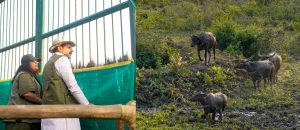
A media workshop was held in Sariska to discuss the conservation measures atthe Sariska Tiger Reserve in Rajasthan’s Alwar district.
At the workshop, Sariska Regional Director Sangram Singh Katiyar told reporters that a tiger and village rehabilitation program was initiated in Sariska in 2008 and is ongoing. Currently, there are approximately 50 tigers in the reserve.
He explained that the increase in tiger numbers since the extinction of tigers in Sariska is due to the monitoring system. The Sariska area can accommodate a maximum of 40 tigers, but with 50 tigers, the forest cover is also limited.
Katiyar explained that if the growth rate continues at this rate, the tiger population could increase by approximately 12 tigers a year. The forest is completely safe. Grassland development is underway in Sariska. Approximately 500 hectares of grassland is being developed.
Katiyar said tourist numbers are also steadily increasing, as Sariska is close to Delhi. Therefore, tourists are constantly visiting Sariska. The ease of tiger sightings here is also significantly boosting tourism.
He stated that the area is being developed as a major tourist hub. Facilities are being enhanced to ensure visitors face no inconvenience. This is expected to lead to a 30 percent increase in tourism.
Katiyar explained that the buffer zone receives the most tourists. Tourists do not visit the core zone because the dense forest here allows tigers to escape into the forest. The roads are very poor. Therefore, the buffer zone receives the most tourists. The number of tigers is also steadily increasing in the buffer zone.
Sariska Deputy Forest Conservator Abhimanyu Saharan stated that water sources are being developed in Sariska to provide easy access to water for wildlife. In the summer, wildlife in Sariska will no longer face water shortages. Previously, water was supplied using tankers. However, solar borewells have been installed throughout the site, filling water holes and providing easy access to water for wildlife.
He also stated that grasslands are being developed, where new breeding grounds are underway. New vegetation will be visible in Sariska after the monsoon.
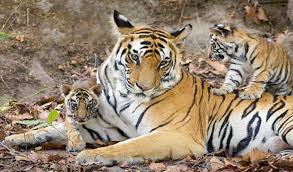
Tigress ST-17 has given birth to three cubs
Meanwhile, there is good news for tiger lovers. Tigress ST-17 has given birth to three cubs. According to information received, the cubs were confirmed based on camera trap images and ground patrols in the Akbarpur area of the Sariska Tiger Project. The three cubs were clearly visible on camera with tigress ST-17.
The tigress and cubs’ activities appeared to be normal. With this, the number of tigers in Sariska has increased to 52. Tigress ST-17 had previously also given birth to cubs. This is her second successful delivery. The concerned tiger monitoring team has been instructed to continuously monitor the activities of the tigress and her cubs.