Bhadohi district of Uttar Pradesh, once a witness to British colonial exploitation through indigo cultivation, has today established its identity on the world stage for its handmade carpets.
Gopiganj and the surrounding area were a major center of indigo production in the 18th and 19th centuries, where farmers were forced to cultivate indigo under the British system of forced labor. According to historian Hariom Shastri, the fertile land along the Ganges was considered suitable for indigo cultivation, and indigo factories operated in several villages, including Amwa, the remains of which still bear witness to that era.
It is said that the farmers raised their voices against the exploitation, and the flames of the Indigo Rebellion reached eastern Uttar Pradesh. At the end of the 19th century, after the development of synthetic dyes in Germany, the demand for natural indigo declined, and gradually indigo cultivation in this region came to an end. This created a livelihood crisis for the local laborers, who then turned to the carpet industry to overcome it.
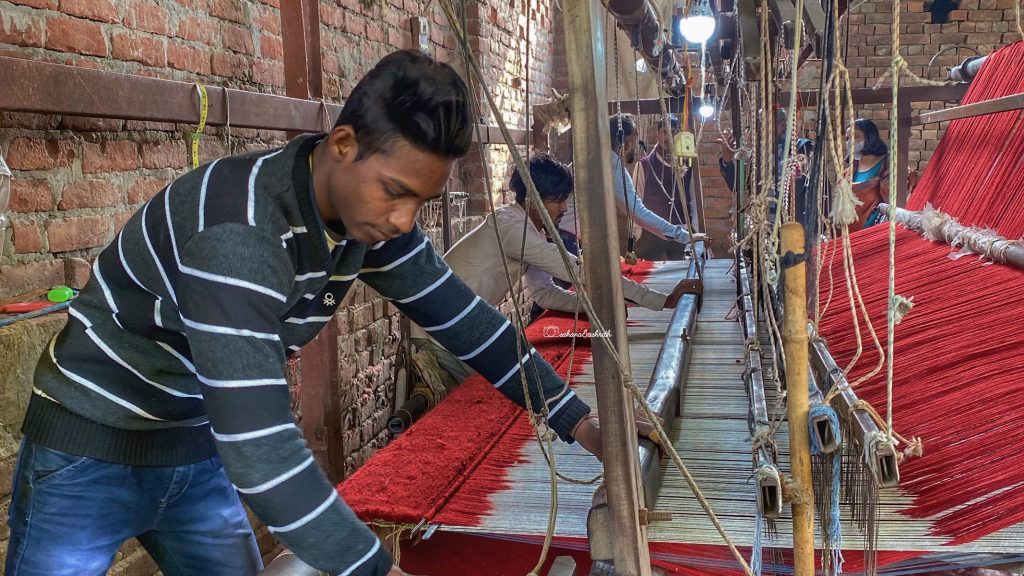
Over time, the hard work of the laborers involved in carpet weaving, dyeing, washing, and packing established Bhadohi as the “Carpet City.” Bhadohi’s share in the country’s handmade carpet exports is estimated to be 60 to 70 percent. Carpets worth approximately Rs. 9,500 to 14,000 crore are exported annually from here to the United States and European countries. The hard work of more than 500 export units and lakhs of weavers has given Bhadohi a unique identity on the global map.