
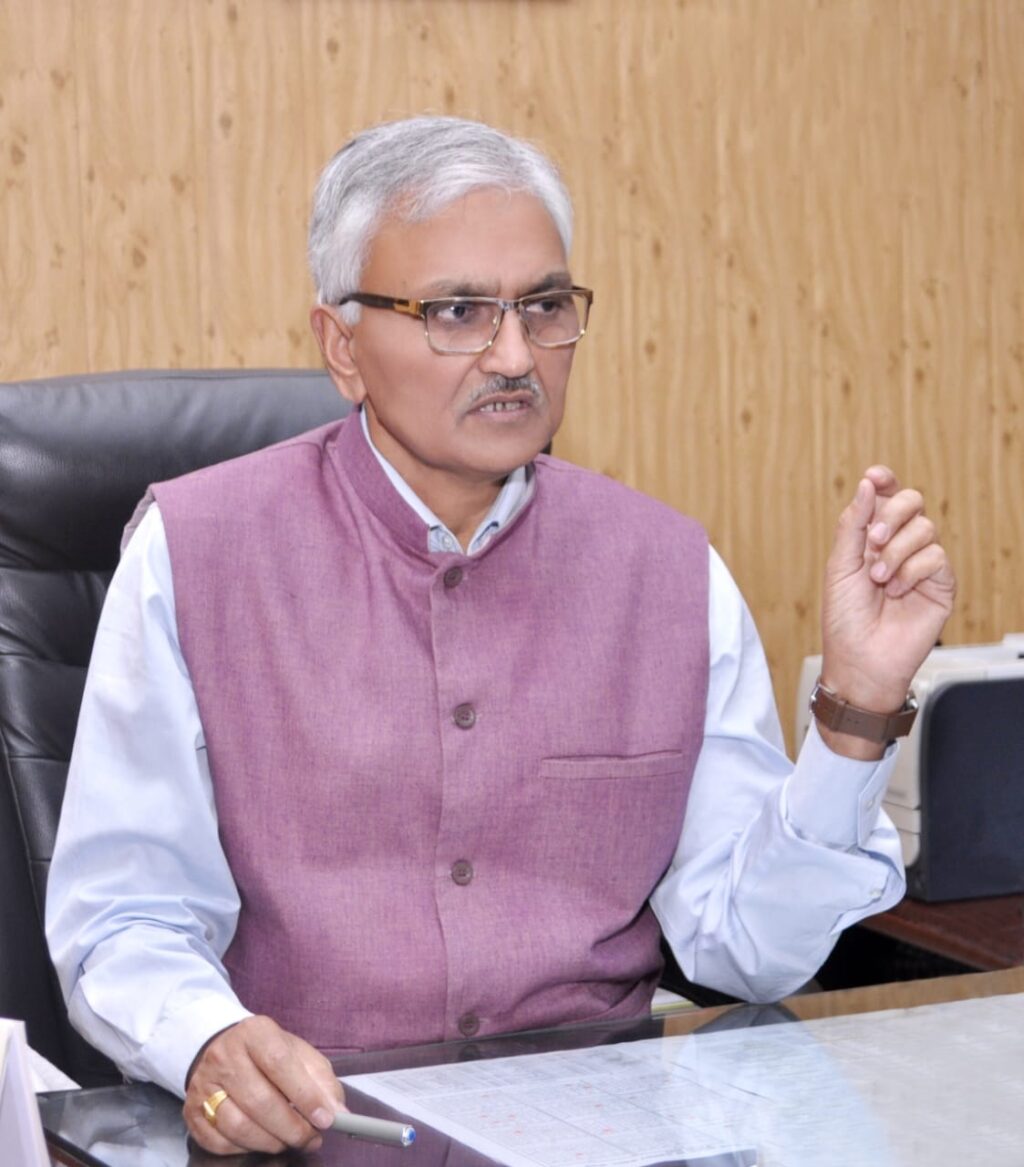
By Prof. C.C. Tripathi
The latest chapter in India’s economic progress is not only an inspiring achievement, but also a symbol of the ever-growing influence of India’s global power. According to the International Monetary Fund (IMF), India has become the fourth largest economy in the world.
The development of a country’s economy is a complex and multifaceted process, which reflects the economic, social, and technological progress of the country. The development of the economy occurs when a country makes continuous and inclusive improvements in production, income, and quality of life by making effective use of its resources. India’s GDP has reached around $13-14 trillion, placing it in fourth place after the US, China and Germany.
Result of a nation’s long-term planning
This is not just a statistical achievement, but the result of a nation’s long-term planning, demographic dividend, technological advancement and socio-cultural changes, but also the vision of ‘Nation First’ policy of the Union Government under the leadership of Prime Minister Narendra Modi, “Viksit Bharat @ 2047”. And it is the result of a comprehensive strategy of inclusive growth.
With about 65% of India’s population of over 1.4 billion people below the age of 35, this young workforce is now at the heart of India’s economic success — a resource that is equally contributing to productivity, innovation and consumption.
It is this demographic dividend that has placed India in the league of the world’s largest economies. India’s services sector contributes about 55% to the GDP, which has not only become an engine of growth within the country, but has also given India a key role in the global economy.
Information Technology, BPO, Financial Services, and Telecom — these are the areas in which India has made its mark globally. Today, India is the leading exporter of IT services, which is not only increasing revenues, but also increasing India’s credibility in the global business world.
Impetus to technological inclusion
Initiatives like ‘Digital India’ have given impetus to technological inclusion in the country. The Unified Payments Interface (UPI) has made India a leader in the world of digital payments. Today, even a common citizen is using e-commerce, fintech, and digital services effortlessly, giving the economy momentum from the grassroots level.
Pharmacy of the World
Schemes like ‘Make in India’ have rejuvenated India’s manufacturing sector. India’s presence in automobile, pharmaceutical, textile and chemical industries is now being felt globally. In the pharma sector, India has been called the ‘Pharmacy of the World’, which is a testimony to our research power and production capacity.
Start-up culture
After the Green Revolution, the incorporation of technology in agriculture – such as drones, improved seeds, and smart irrigation – is pushing farmers towards higher production and income. India is now not only self-sufficient in food grains but is also poised to play a role in global food security. India’s start-up culture has infused a new economic energy.
The Prime Minister’s vision of “Sabka Saath, Sabka Vikas, Sabka Vishwas and Sabka Prayas” is now deeply embedded in India’s economic and social fabric. The government’s flagship schemes — such as Make in India, Digital India, Startup India, Skill India, Pradhan Mantri Gati Shakti Yojana, and Productivity-Linked Incentives (PLI) — have not only made India an investment and manufacturing hub, but also a hub of manufacturing.
Rather, it has also strengthened the path of self-reliant India. The growing number of unicorn companies is a testimony to the fact that Indian youth are no longer job seekers, but job creators. This wave of innovation, technological solutions and entrepreneurship has created new jobs and opportunities.
India has continuously worked towards reform
Since the economic liberalization of 1991, India has continuously worked towards reforms. Reforms such as GST, Insolvency and Bankruptcy Code (IBC), liberalization of Foreign Direct Investment (FDI), and ease of doing business have attracted global investors to India. These efforts have provided India with a transparent, stable and growth-oriented economic environment.
India’s commitment in areas such as green energy, electric vehicles and sustainable development is a sign that the nation is preparing not only for the present but also for the future. Experts believe that if India continues to grow at this pace, it can become the third largest economy in the next decade.
The latest chapter in India’s economic progress is not only a matter of pride but also a result of dedication, innovation and policy foresight in which technical education has played a crucial role. This achievement is not just a story of numbers, but also of institutional initiatives that have accelerated the pace of nation-building by making human resources efficient.
Role of technical institutions
With over 65% of India’s population of over 1.4 billion being youth, this demographic dividend can be meaningful only if it is linked to quality technical and vocational education. The role of technical institutions becomes even more important at this juncture — where they are not just giving degrees to young people, but equipping them with innovation, digitisation and industry-oriented skills.
India’s economic journey is no longer limited to investment and production, it has become a story of development driven by knowledge, technology and innovation. Technical institutions are integral to this journey. We have to ensure that technical education not only provides employment but also leads in nation building. It is the responsibility of our technical institutions to not only skill the youth but also inspire them towards innovation, leadership and entrepreneurship.
(Writer is the Director of National Technical Teacher Training & Research Institute, Bhopal)