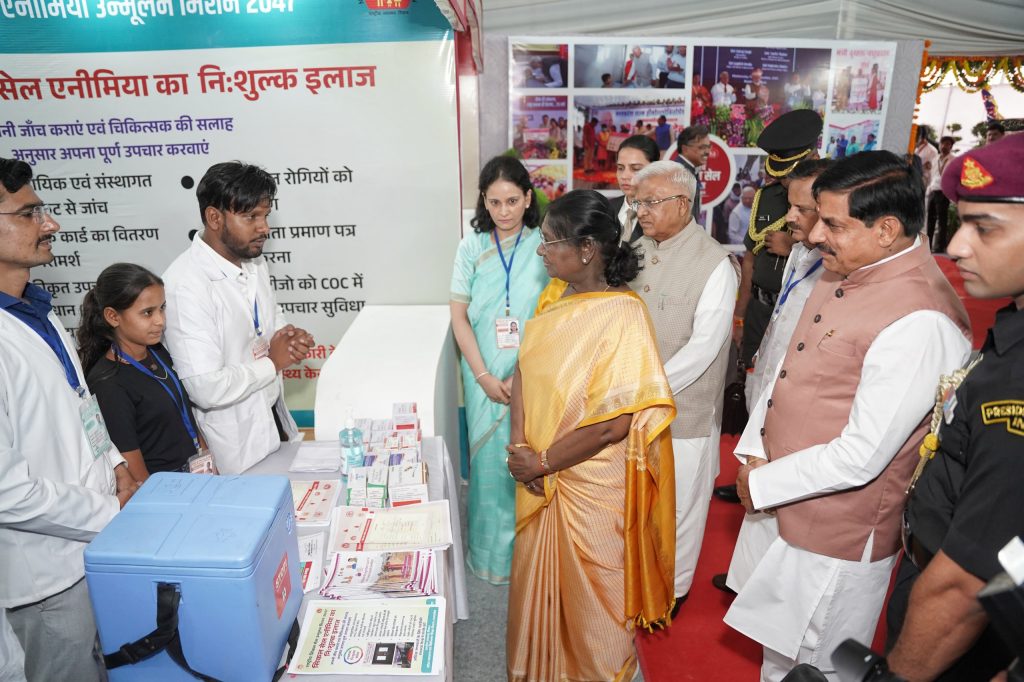
President Droupadi Murmu said that organisation of this special programme on International Sickle Cell Day is a meaningful effort towards addressing an important challenge in healthcare. She appreciated all those associated with the event and commended Madhya Pradesh Government for the multi-dimensional achievements attained under National Sickle Cell Anaemia Elimination Mission.
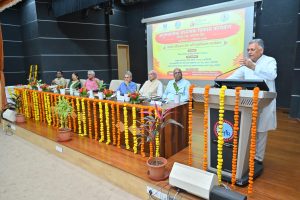
President Murmu was addressing the state-level programme organised on World Sickle Cell Day at Omkareshwar in Khandwa district on Friday. She inaugurated the programme by lighting the ceremonial lamp. Governor Mangubhai Patel and Chief Minister Dr. Mohan Yadav welcomed the President.
President Murmu said it is a matter of satisfaction that many major targets set before the country at the launch of National Mission in 2023 have been achieved ahead of schedule. She said she had been informed that the target of screening 70 million people, from newborns to individuals up to 40 years of age, has already been achieved. This, she said, is one of the largest genetic disease screening initiatives in the world.
The President said Madhya Pradesh has made a significant contribution to this achievement. More than 12.5 million people have been screened in the state so far, and most of them have also been provided Genetic Counselling Cards.
Murmu said Government of India has treated the challenge of Sickle Cell Disease with utmost seriousness and adopted a comprehensive approach during the past few years. Nearly three years ago, Prime Minister Narendra Modi launched National Sickle Cell Anaemia Elimination Mission from Shahdol in Madhya Pradesh. Behind this initiative was not only a strong governmental commitment but also a far-sighted vision to address every dimension of this challenge.
She said she had been informed that this was the first mission in the country implemented through a joint model of Ministry of Health and Family Welfare and Ministry of Tribal Affairs. It was not viewed merely as a health issue, but as a matter of tribal health, genetic awareness, preventive healthcare and behavioural change. Scientific and social studies conducted by ICMR, Tribal Health Research Institutes, AIIMS, NHM, WHO and various state governments formed the foundation of this mission.