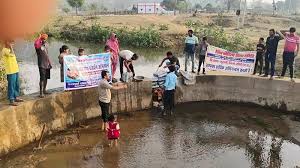
Water is life, and Madhya Pradesh is emerging as a model in the conservation and sustainable management of this vital resource. Guided by the vision of Prime Minister Narendra Modi and the initiative of Chief Minister Dr. Mohan Yadav, the Jal Ganga Samvardhan Abhiyan launched in the state has evolved beyond a government programme into a people’s movement driven by public participation.
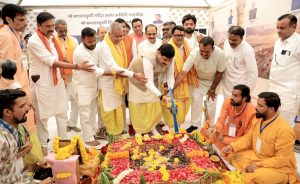
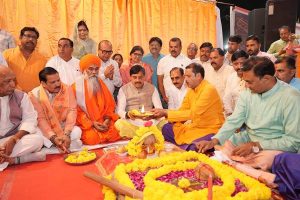
This effort to rejuvenate rivers, ponds, and traditional water sources is receiving increasing international recognition. The ‘Sadanira Samagam‘, organised at the historic Bharat Bhavan in Bhopal, highlighted the link between water conservation and India’s rich cultural heritage.
Diplomats from Cyprus, Fiji, Mexico, Nepal, Trinidad and Tobago, and Ecuador not only participated in the event but also appreciated the ‘Madhya Pradesh Model’ of water management and expressed interest in adopting similar initiatives in their respective countries. The state’s efforts towards water self-reliance are gaining recognition on the global stage.
Cyprus and Fiji Applaud the ‘Madhya Pradesh Model’
During the seven-day international event, the High Commissioner of Cyprus, Evagoras Vryonides, described water scarcity as a serious global challenge and emphasised the importance of raising public awareness to address it. He described the dialogue with Veer Bharat Nyas as meaningful and informed participants that a cultural delegation from Cyprus would perform in Bhopal on June 20–21, 2026.
The High Commissioner of Fiji, Jagnnath Sami, highlighted climate change as a major concern and noted that India and Fiji have shared close ties since 1948. Appreciating Chief Minister Dr. Yadav’s initiative, he remarked that although the two countries are geographically distant, their concerns regarding environmental protection and human welfare are closely aligned.
Mexico and Nepal Describe Water Conservation as a Shared Responsibility
Ms Vanessa Adrian, Head of Culture at the Embassy of Mexico, described water conservation as a shared global responsibility and praised the effort to link water and rivers with cultural heritage. Referring to India and Mexico as heirs to ancient civilisations, she emphasised the importance of developing common solutions through mutual cooperation.
Similarly, Deepak Pokharel, First Secretary at the Embassy of Nepal, said that the event serves as a reminder of humanity’s responsibility towards nature. Recalling his visit to the Tribal Museum, he observed that the cultural traditions, values and social sensitivities of India and Nepal are so similar that visiting India felt like returning to his own village.
Trinidad and Tobago and Ecuador Express Interest in Adopting the Initiative
The High Commissioner of Trinidad and Tobago, Chandradath Singh, described the event as an excellent effort to communicate environmental concerns to the public through cultural expression. He said the initiative conveys a strong message of shared global responsibility.
Jorge Vinicio Anrango, Deputy Chief of Mission of Ecuador, appreciated the efforts of the Madhya Pradesh Government and Veer Bharat Nyas. Drawing inspiration from the initiative, he announced plans to organise similar water conservation-focused ‘Sadanira Sangam’ in Ecuador.
Madhya Pradesh Writing a New Chapter in Water Self-Reliance
Diplomats from countries across Asia, Europe, North America, South America and the Caribbean not only participated in the conclave but also showed keen interest in the innovations introduced under the Jal Ganga Samvardhan Abhiyan, which is driven by public participation.
Madhya Pradesh is setting new benchmarks in water self-reliance. More than 2.12 lakh water conservation structures have already been completed across the state, and the Government has set a target of reaching 3.66 lakh structures. The growing international recognition of this campaign is a matter of pride for the state. The ‘Madhya Pradesh Model’ is increasingly emerging as a source of inspiration for water conservation initiatives beyond India’s borders.