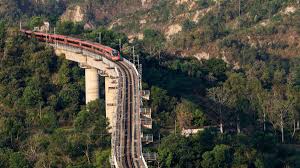
For decades, the idea of stepping onto a train in Jammu and arriving directly in Srinagar belonged to the realm of ambition rather than reality. That ambition became history today. Union Minister for Railways Ashwini Vaishnaw flagged off the extended Srinagar–Shri Mata Vaishno Devi Katra Vande Bharat Express service up to Jammu Tawi Railway Station, directly linking Jammu and Kashmir by passenger train for the very first time.
A single seamless rail corridor now connects two of the region’s most iconic destinations, promising not just faster journeys but a transformation in how people, commerce, and tourism flow across this breathtaking landscape.
Jammu Tawi Emerges as Key Rail Gateway
Jammu Tawi stands as one of the most important railway stations in northern India, serving as a crucial gateway that connects the Union Territory with the rest of the country. With extensive rail links to major destinations such as Kanyakumari, Howrah, Mumbai and other metropolitan hubs, the station plays a vital role in ensuring seamless mobility across regions.
Highlighting the significance of the development, Vaishnaw during his address at the flagging-off event said that a major milestone has been achieved with the expansion of rail connectivity in Jammu and Kashmir.
With the train now reaching Jammu Tawi, travel to key pilgrimage destinations such as Shri Mata Vaishno Devi and Shri Amarnath will become more convenient and accessible for passengers across the country.
High Demand and Enhanced Travel Experience
The Railway Minister highlighted that the Vande Bharat service has witnessed full occupancy since its launch, reflecting its growing popularity among passengers, underlining its importance as a lifeline for Jammu and Kashmir as well as for the rest of the country. He added that today, the 20-coach Vande Bharat Express service between Jammu and Srinagar has been launched, marking a significant enhancement in passenger capacity on this vital route.
Jammu and Kashmir: Paradise on Earth
Jammu and Kashmir, often described as the “Paradise on Earth,” is renowned for its breathtaking natural beauty, snow-capped mountains, lush valleys and serene lakes. The region is home to warm and resilient communities whose rich cultural heritage adds to its unique identity. Improved rail connectivity is expected to further boost tourism, enabling more people from across the country to experience the region’s scenic charm and cultural vibrancy.
The Union Minister observed that enhanced rail infrastructure is also facilitating economic growth by enabling smoother transportation of local produce. Jammu and Kashmir is known for its premium dry fruits, exquisite Pashmina shawls, apples and traditional handwoven carpets (kaleen), which are in demand across India. With better rail connectivity, the movement of these goods to markets nationwide is becoming faster and more efficient, thereby supporting local livelihoods and expanding trade opportunities.
Boost to Trade and Cultural Linkages
Vaishnaw stated that this is India’s first experience with railway operations at such high altitudes, and the learnings gained will guide future infrastructure developments. He added that the railway line has significantly improved cargo movement in the region, reducing transportation costs and ensuring smoother logistics for essential goods such as fertilizers and dairy products like milk. Agricultural produce, including cherries, is also being transported through parcel services, enhancing market access for local farmers.
He further noted that the rail network has simplified logistics and contributed to economic activity in the region. Looking ahead, the focus will be on strengthening maintenance systems and deploying advanced technologies for bridges and tunnels to ensure safety and reliability in the Himalayan terrain.