In a small village of Madhya Pradesh, a woman and her family of four relied on traditional farming practices, using outdated seeds that yielded low and uncertain returns. With only two acres of land and mounting debts, she struggled to repay loans taken from relatives. Her seasonal earnings remained limited to about Rs 5,000, insufficient to meet even basic household needs.
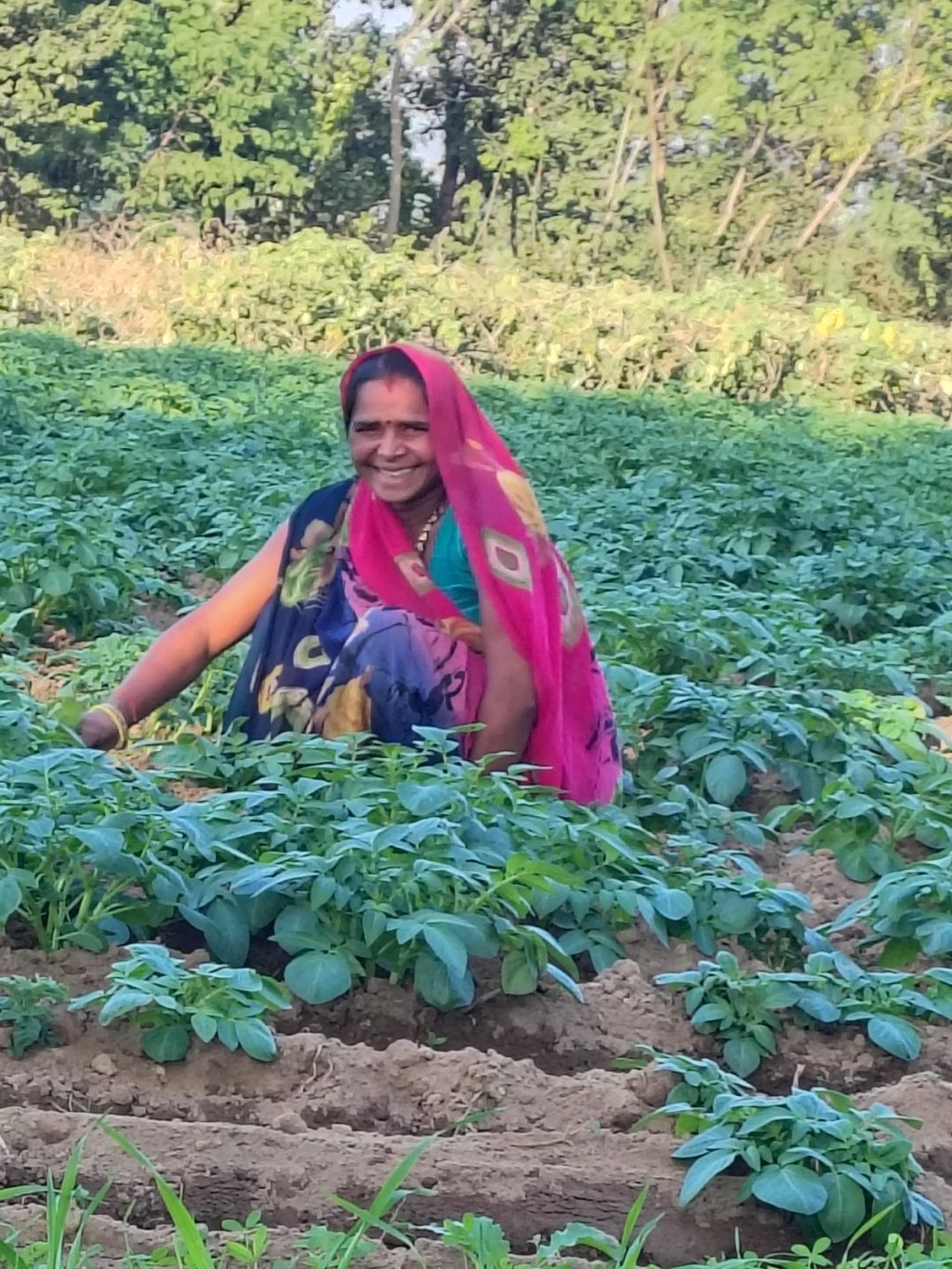
This is the story of Janki Kushwaha, a farmer from Maumasaniya village of Madhya Pradesh. Everything changed for her when field staff from DS Group’s NGO partner, Manjari Foundation, visited her village during a survey. They introduced the Entrepreneurship Development Program (EDP) and invited her to join. Curious about entrepreneurship, Janki voluntarily signed up, hoping to find a way to improve her livelihood.
The program was structured to build both confidence and capability. Across four modules spread over eight days, trainers Harendra Sharma and Harikant Sharma, in association with DS Group and Manjari Foundation, guided the participants.
Janki learned to look at farming differently
During the training, Janki learned to look at farming differently; she learned to recognise what she already had, what was holding her back, the opportunities she could use and the risks she needed to prepare for. Alongside this, participants were also taught financial planning, marketing and simple record-keeping that helped them think like an entrepreneur. “I realised farming was not just about growing crops. It could be managed and run like a business,” she recalls while speaking at a session.
Janki adopted drip irrigation
Armed with this knowledge, Janki began cultivating vegetables on one acre of land, while dedicating the other acre to grains. She adopted drip irrigation, a method that initially felt difficult but soon proved invaluable; it helped her in conserving water, reducing weed growth and supporting dense plantation. Over the year, her vegetable yield rose to nearly 40 quintals, with crops including brinjal, tomato, onion, and gourds. On the second acre, she followed a three-crop cycle of pulses, oilseeds and wheat, producing 30–35 quintals annually.
Impact was immediate and measurable
The impact was immediate and measurable. Her annual income, once limited to Rs 60,000 at best, rose to nearly Rs 2.5 lakh in peak cycles. After deducting expenses, she now nets around Rs 1,00,000 annually, with savings of Rs 20,000. Previously weekly sales of brinjal alone (nearly 100–150 kg at Rs 30 per kg in wholesale markets) brought steady cash flow. Hybrid seeds and improved cycles further strengthened her returns.
Fellow farmers now visit her fields
The extra income went towards repaying old loans, investing in better farming tools, and, most importantly, securing her children’s education and medical needs. Beyond her own progress, Janki has become an example in Maumasaniya. Fellow farmers, once hesitant to move away from tradition, now visit her fields to learn about hybrid seeds, marketing and the drip irrigation system. Her success has sparked conversations in the community about farming as an enterprise, not just subsistence.
“The biggest change for me was learning how to plan. Earlier, I worried only about the next harvest. Today, I can think about the next year and the future of my children,” Janki said while narrating her journey. Her journey reflects how DS Group’s CSR interventions are redefining rural livelihoods, by combining technical knowledge with entrepreneurship and enabling farmers like Janki to move from debt to dignity.