NITTTR Bhopal has launched several academic programs since becoming a deemed university. The institute is launching a unique program, BSMS (Bachelor of Science and Master of Science), based on the Indian knowledge tradition from the upcoming academic session. Toward this end, the institute is finalizing its action plan in collaboration with subject experts in this field. The BSMS course will be the first in the country to offer courses in the Indian knowledge tradition. This course will be conducted in accordance with the National Education Policy.
Institute Director Prof. C.C. Tripathi stated that NITTTR students will not be limited to a degree, but will gain practical skills and the opportunity to work with institutions related to this field. There is ample evidence that all forms of knowledge, including religion, philosophy, science, architecture, astrology, astronomy, architecture, dance, music, and so on, originated in India.
Prof. Tripathi said there are countless fields in which Indian contributions are unparalleled, including art, science, mathematics, and many other fields. Many modern inventions are based on the findings of Indian research. Our students and teachers should be aware of this.
This course will be job-oriented, providing students with the opportunity to study and work on field-based projects exploring various aspects of the Indian knowledge tradition, Indian science and technology traditions, as well as the latest technologies for preserving the heritage of the knowledge tradition, Prof. Tripathi added.
Professor P.K. Purohit, Dean of the Institute of Science and Head of the Department of Indian Knowledge Traditions, explained that a large part of the Indian knowledge tradition is based on scientific principles that are still useful in modern science. To preserve and promote the rich heritage of the Indian knowledge tradition, it is essential to integrate it with a scientific perspective so that it can be integrated with modern education and research.
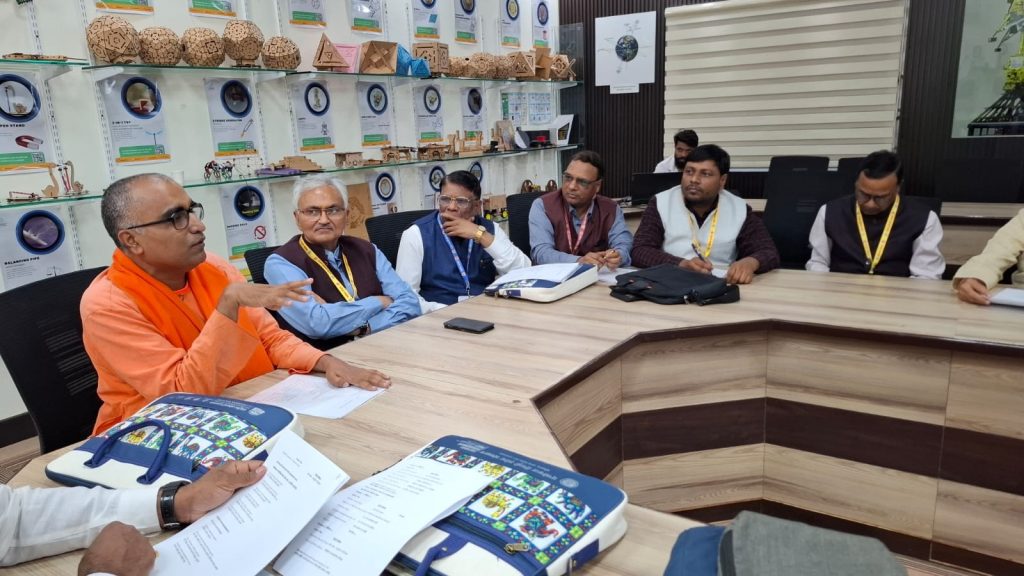
According to Purohit, several important suggestions emerged from the meeting, including the idea that this course should be conducted in collaboration with institutions that practice the Indian knowledge tradition, including the Ramakrishna Mission, Ayurvedic institutions, heritage centers, art centers, yoga institutes, and cultural centers. Subjects like ancient history, Hindu education, and other religious education should be included in the curriculum. Since the undergraduate degree is in science, there should be provision for laboratories for various subjects.
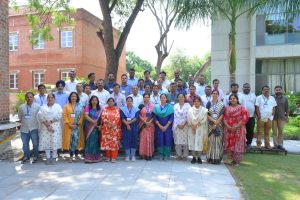
This important meeting was attended by Dr. Madhukarbhai Padvi, Dr. Sachchidananda Mishra, Mr. Ashutosh Bhatnagar, Sandeep Kumar Singh, Swami Narsimandan, Prof. Ajay Jain, Dr. Amarananda Reddy, Ankur Joshi, Vikas Singh, Dr. Ramendra Singh, Dr. Amit Dubey, and many other experts.