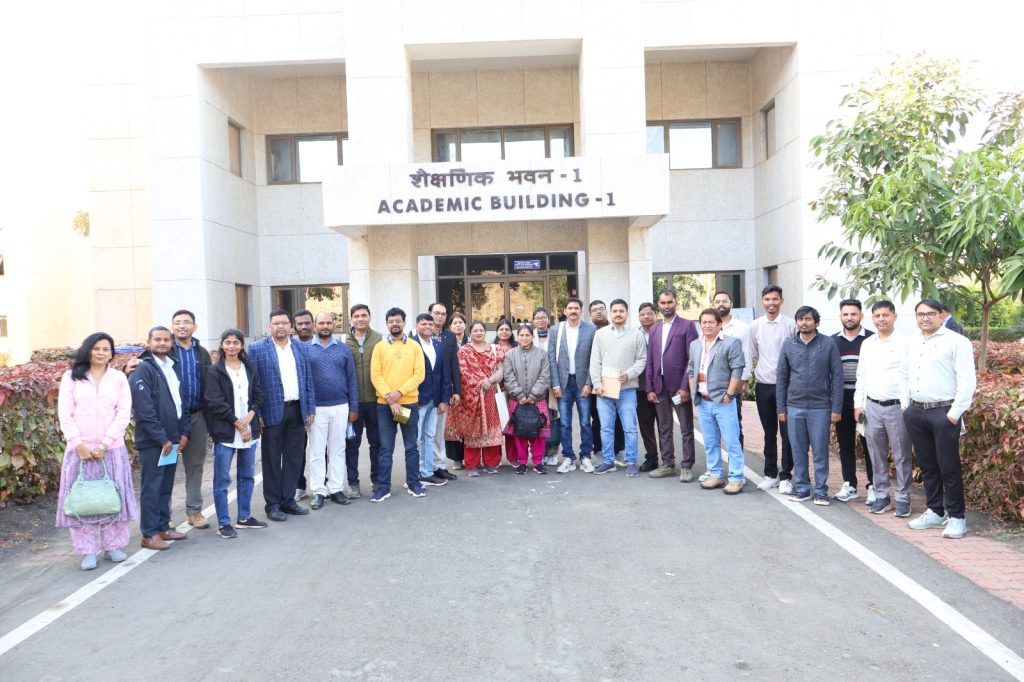
NITTTR Bhopal is organizing five 5-day training programs for faculty members of the Madhya Pradesh Higher Education Department on the topics of Semiconductor Science and Technology and Intellectual Property Rights (IPR). This initiative aims to provide teachers, and through them, their students, with knowledge about this emerging field.
According to the institute’s director, Prof. C.C. Tripathi, the world is currently looking to India in the field of semiconductors. This sector is a priority for the Government of India. It is the responsibility of our teachers to create awareness among students through research and innovation in this field, so that they can pursue successful careers in the semiconductor industry. Trained teachers can make the curriculum industry-oriented and guide students towards the right direction in semiconductor-based projects, internships, and career options.
Prof. P.K. Purohit, Dean (Corporate and International Relations) and Coordinator for Madhya Pradesh, stated that the institute is conducting 75 training programs for teachers of the Higher Education Department this year. Through 51 of these programs, more than 1800 teachers have already received training in emerging areas, and 250 students have been trained through 8 programs. In the training on Intellectual Property Rights, teachers are being provided with detailed training on copyright, patents, trademarks, industrial designs, GI tags, trade secrets, plant variety protection, etc.
Purohit said this training is crucial because teachers need to understand IPR to protect their academic materials, use others’ materials correctly, comply with copyright rules when using books, websites, videos, or research papers, avoid plagiarism, and guide students in the digital age, ensuring originality and proper use of online content. Understanding IPR rules helps teachers protect their innovations through patents and copyrights when conducting research, developing projects, or creating new ideas. A good understanding of IPR rules also prevents teachers from inadvertently misusing copyrighted material.