A review by Sunil Goyal, Senior Journalist
Some characters are remembered for the kingdoms they win, others endure for the kingdoms they refuse. Bharat belongs to the rarer, more luminous tradition, a man whose greatness rests not upon a throne, but upon his refusal to place power above love.
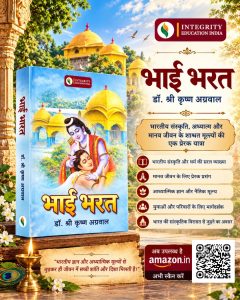
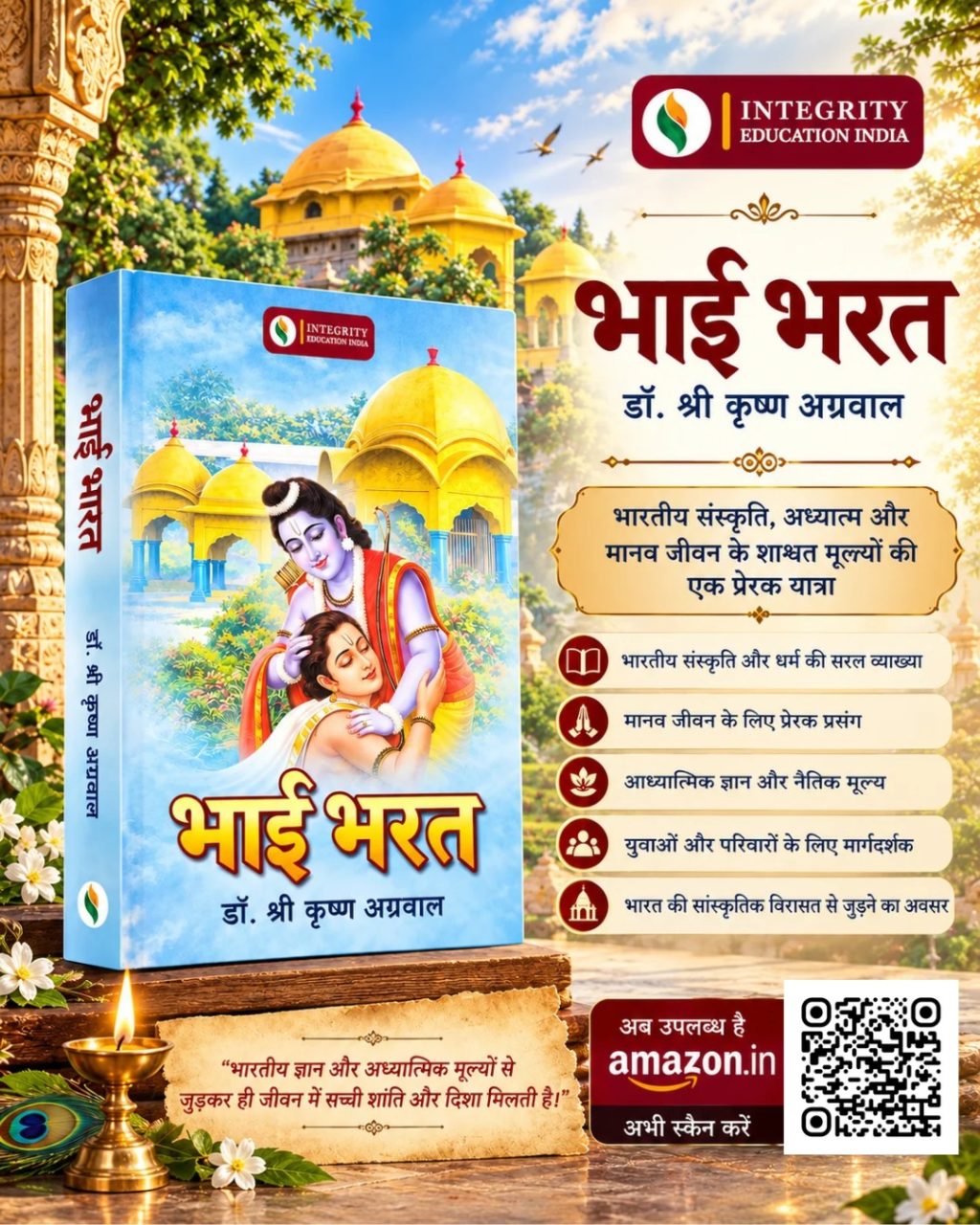
Dr. Shri Krishna Agarwal’s Bhai Bharat, published by Integrity Education India, turns our attention to this deeply moving figure of the Ramayana. It invites us to look beyond the familiar act of royal renunciation and contemplate the inner life that gives it meaning, a brother’s anguish, a conscience burdened by an injustice it did not commit and a love that asks for nothing in return.
Within the moral universe of the Ramayana, Shri Rama embodies righteousness, Lakshmana devoted service and Hanuman unwavering devotion. Bharat illuminates another, equally demanding ideal, the ability to surrender personal advantage without surrendering responsibility. His greatness lies not simply in refusing what is offered to him but in recognising that possession does not necessarily confer moral entitlement.
For Bharat, the throne cannot become rightfully his merely because circumstances have placed it within reach. His refusal is therefore more than an expression of affection for his elder brother. It is an assertion of conscience, a declaration that neither ambition nor opportunity can justify the acceptance of another’s rightful place.
The emotional depth of his character emerges most powerfully in the burden he carries for his mother Kaikeyi’s actions. Innocent of her designs, he nevertheless suffers their consequences as an intimate moral wound. His grief is not the fear of losing power or public esteem; it is the anguish of knowing that someone he loves has suffered through an act committed in his name.
This tension gives Bharat’s devotion its extraordinary poignancy. Shri Rama honours their father’s word by accepting exile; Bharat honours his brother by refusing to turn that exile into personal gain. Their paths differ, yet both are governed by the same fidelity to duty.
The encounter at Chitrakoot brings these parallel commitments into moving focus.
Bharat’s appeal for Shri Rama’s return is not merely a plea to restore a king to his kingdom. It is the voice of a younger brother seeking to restore the moral order of his world. Here, affection and duty do not stand apart, each deepens the meaning of the other.
The enduring strength of Bhai Bharat lies in this understanding of dharma as a lived responsibility rather than a ceremonial ideal. Faith acquires substance through conduct, love proves itself through restraint; and sacrifice becomes meaningful when it protects something beyond the self.
At a time when success is so often measured by acquisition, visibility and authority, Bharat offers a searching alternative. He asks us to consider not only what we can claim, but what we ought to accept and what we must have the courage to relinquish.
Dr. Agarwal’s work brings that question into the intimate sphere of family, conscience, and human relationships. Its central insight is both simple and profound, true greatness need not occupy the highest seat. Sometimes, it is revealed most clearly in the person who refuses to sit there.