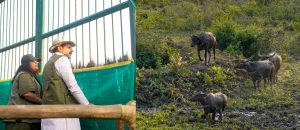
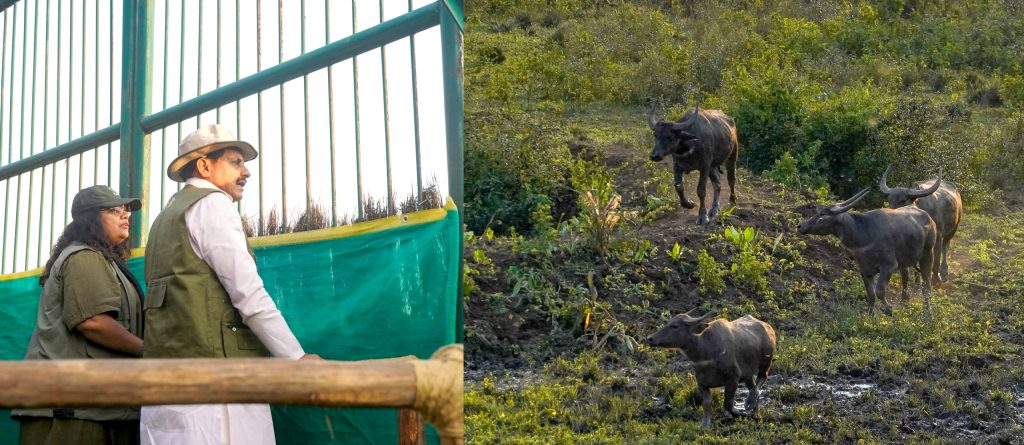
Eight wild buffaloes brought from Assam’s Kaziranga National Park have been relocated to a 17-hectare enclosure in the Supkhar Range of Kanha Tiger Reserve, marking a significant step towards restoring the species in Madhya Pradesh after nearly a century. After the eight wild buffaloes completed quarantine in a one-hectare enclosure, Chief Minister Dr. Mohan Yadav released them into a specially developed 17-hectare enclosure on Sunday to help them acclimatise to local environmental conditions before their eventual release into the wild.
CM Dr. Mohan Yadav said the initiative marked the second phase of wild buffalo reintroduction at Supkhar. With the support of Assam CM Himanta Biswa Sarma, eight buffaloes were transported 2,200 kilometres from Kaziranga to Madhya Pradesh. Further steps towards their release into their natural habitat will be taken after the monsoon.
Eight Buffaloes Relocated from Quarantine Enclosure: Under the wild buffalo reintroduction project, the first batch of four buffaloes—three females and one male—was brought from Kaziranga National Park in Assam on April 28, 2026, and placed in a one-hectare quarantine enclosure at Supkhar in Kanha Tiger Reserve.
A second batch of four, comprising three females and one male, arrived on May 9, bringing the total to eight—six females and two males.
After completing quarantine in a one-hectare enclosure, all eight buffaloes were shifted on October 11, 2026, to a specially developed 17-hectare enclosure at Supkhar, where Chief Minister Dr. Mohan Yadav formally released them for further acclimatisation. Their release into the wild will follow after the necessary assessment.
Target of 50 Buffaloes in Three Years: Wild buffaloes disappeared from Madhya Pradesh’s forests nearly a century ago. Based on evidence of their historical presence in Supkhar, the Forest Department has launched a reintroduction project with a target of establishing 50 buffaloes in the area over the next three years. The initiative aims to strengthen biodiversity, restore wildlife habitats and conserve threatened species.