By Sunil Goyal, Senior Journalist & Researcher
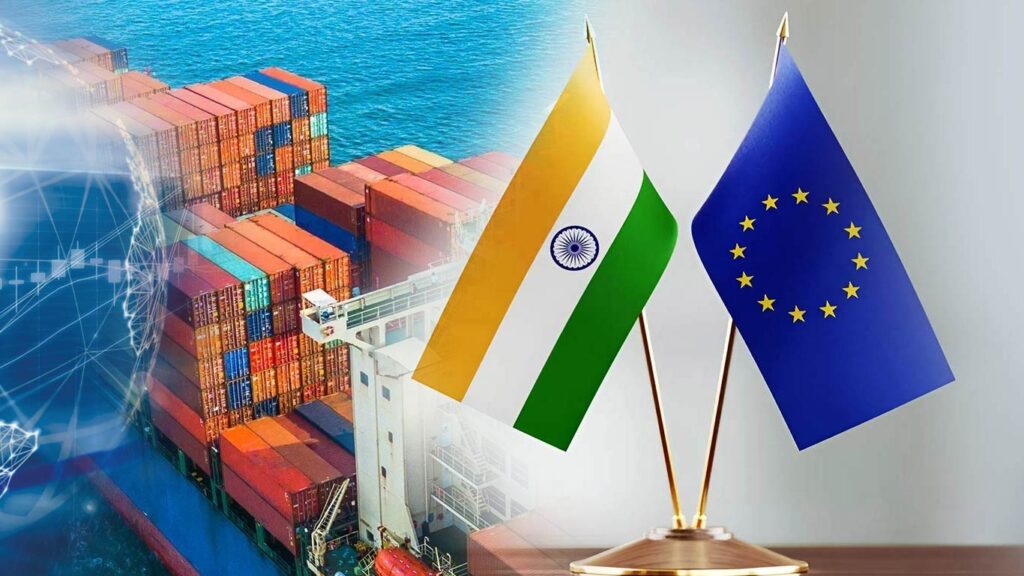
When the European Commission recently unveiled its strategy paper on India calling New Delhi a “future pillar of the global economy” and pushing for deeper trade, defence and technology ties it revived an old question, what does Europe really want from its partnership with India?
The answer, as history shows, is not difficult to grasp. The current EU sanctions and US tariffs targeting India are not about Russian oil. They are about securing long-term access to the Indian market. This echoes a pattern Indians know all too well, the colonial pattern of extracting wealth while offering lofty rhetoric of cooperation.
“These sanctions and tariffs have nothing to do with Russian oil imports. The real objective is now clearer: they seek access to the world’s largest market,” I have emphasized repeatedly. Historically, European powers colonized nations including India under the guise of trade. They plundered raw materials, exploited cheap labor and dumped their manufactured goods in captive markets. The goal remains the same, only the methods have evolved.
Colonial Loot and Brutality
The memory of Europe’s so called “civilizing mission” in India is stained with plunder and blood. When the British East India Company took control of Bengal in 1757, India’s share of the global economy stood at nearly 25%. By the time the British left in 1947, it had shrunk to less than 3%. Centuries of resource extraction, punitive taxes and forced trade drained the subcontinent’s wealth to build European empires.
Famines like the Great Bengal Famine of 1770 and the Bengal Famine of 1943 were not natural disasters but man-made tragedies, worsened by British policies that diverted food grains for war efforts and exports while millions starved to death.
Railways were not built for India’s development but to move raw materials out of the country and soldiers across territories to crush resistance. India’s flourishing textile industry was systematically destroyed, artisans were reduced to beggars and farmers forced into indigo and opium cultivation for Europe’s profits.
This was not trade. It was a daylight robbery enforced with bayonets. And it is this history that Indians cannot afford to forget when Europe now speaks the language of “free trade agreements.”
EU India Talks
Currently, the EU and India are in the final stretch of free trade negotiations with a deal expected by year’s end. The talks, revived in 2022, gained urgency after Donald Trump’s re-election, which led to fresh Western tariffs on Indian and Chinese exports over oil imports from Russia.
Brussels is simultaneously pushing for collaboration on supply chains, green hydrogen, decarbonisation of heavy industry, air transport and investment protection. A defence partnership on the model of Japan and South Korea is also being floated.
But the big question remains, What does India gain in return?
Not Oil, But Markets
Washington’s claim that India is profiteering from discounted Russian crude does not hold water. India’s export volumes of petroleum products remain largely unchanged since before the Ukraine war. The difference lies in geography with Europe cutting itself off from Russian oil, India redirected supplies to European markets. Meanwhile, Asia was supplied by refineries in Kuwait, the UAE and Oman. Yet India is singled out for criticism. The EU itself continues to import Russian natural gas. Turkey imports far more Russian oil than India and even re-exports refined products to Europe. But Europe reserves its censure for India. The hypocrisy could not be clearer.
Echoes of Colonial Patterns
The colonial parallels are unmistakable. From the 18th and 19th centuries when Britain and other European powers drained India’s wealth to the 21st century where sanctions, tariffs and trade deals serve similar ends, Europe’s ambition remains unchanged to secure markets, resources and influence on its own terms. Even today, while pushing India for free trade, Europe resists any real reciprocity. The EU talks endlessly of freedom of goods and services. But why not extend that freedom to people?
Why should Indian citizens not get visa-free access to Europe and Britain?
Why should Indian students pay exorbitant fees and face discriminatory admission rules, while European corporations demand seamless entry into India?
Why is free movement demanded for products, but denied to professionals and workers?
This is not a partnership. This is exploitation dressed up as diplomacy.
Europe’s Dilemma
The EU admits there are “clear disagreements” over India’s Russia policy, yet insists it must keep India engaged to prevent rivals from filling the void. To Brussels, India is both an opportunity and a challenge, a markett projected to be the world’s third largest economy by 2030, yet a nation unwilling to break its historic ties with Moscow. But for India, the lesson is sharper. Europe’s motives whether in the 19th century or the 21st remain the same. The rhetoric may change, the instruments may modernize, but the objectives have not shifted.
The Clear Message
India must tread carefully. Free trade without free movement of people and knowledge is a neo-colonial bargain. We cannot allow ourselves to become a marketplace for Europe’s goods while our students, workers and professionals face closed borders and crushing restrictions.
The message is simple and uncompromising, if Europe wants India’s markets, it must also open its doors to India’s people. Otherwise, “free trade” is nothing but colonial greed in modern attire.