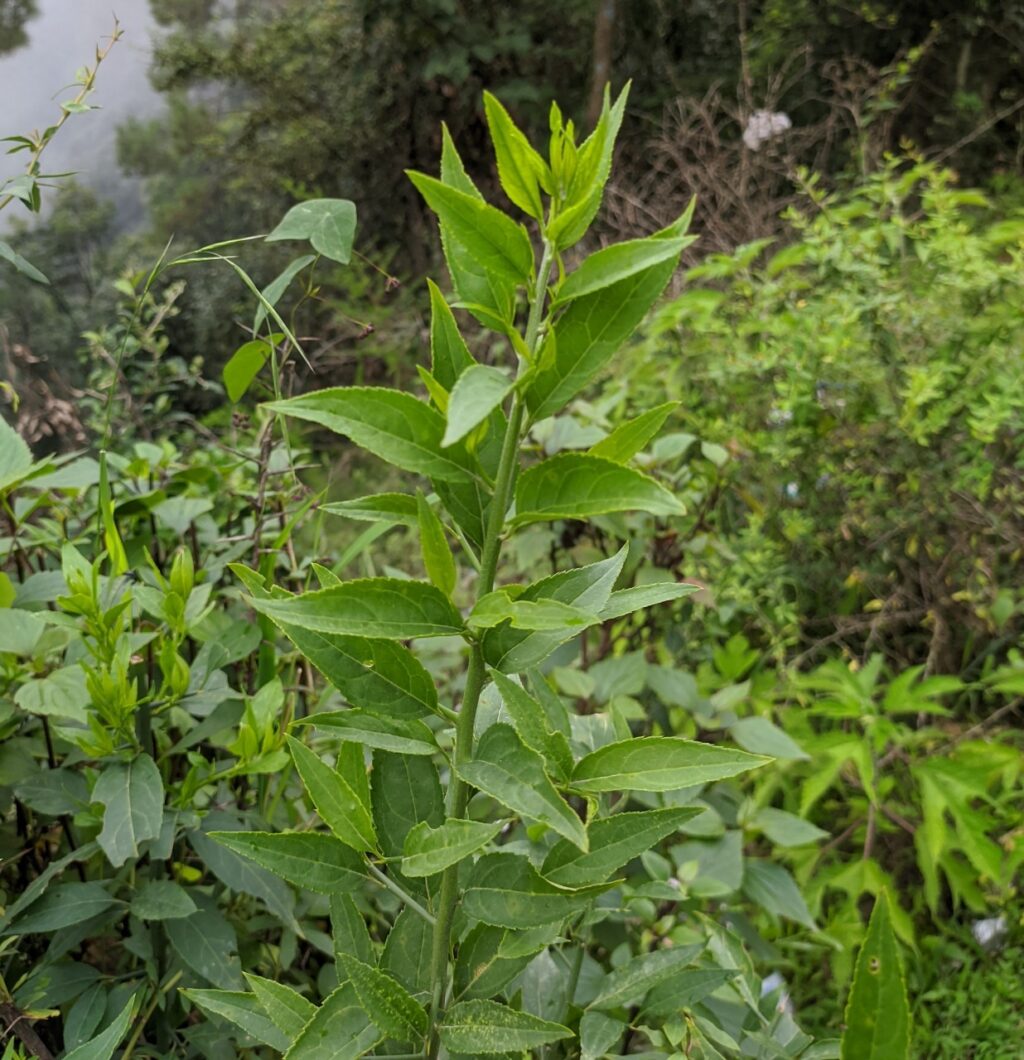
Solan: Himalayan medicinal plants, traditionally used by tribal communities for generations, are being scientifically validated for their health potential in managing conditions such as asthma, fever, jaundice, body pain, respiratory issues, and infections.
A major body of work by Dr. Radha, Assistant Professor and In-Charge of the Herbarium and Drug Museum at the School of Biological and Environmental Sciences, Shoolini University, has shown that many of these plants are rich in bioactive compounds with antioxidant, antimicrobial, anti-inflammatory, antidiabetic, anticancer, and hepatoprotective properties. In 2025, she has filed four patents that mark one of the first steps in transforming this indigenous knowledge into functional foods and natural antimicrobial extractions.
Among the plants studied, Bombax ceiba (Semal) flowers are especially promising. Traditionally valued for their cooling and restorative effects, they have been found to contain dietary fibre, phenols, and flavonoids that contribute to antioxidant and anti-inflammatory activities and help address dietary deficiencies.
Building on this, Dr. Radha developed a nutrient-rich jam fortified with Bombax ceiba flowers and apple pulp, and a ready-to-serve drink that retains its bioactive compounds. Both formulations are entirely free from artificial preservatives and colourants. Scientific reviews also highlight the flower’s potential antidiabetic, anticancer, antimicrobial, and hepatoprotective properties.
Two other Himalayan plants demonstrated strong antimicrobial action in laboratory studies. Prinsepia utilis (Himalayan Cherry), long used in traditional Indian and Chinese medicine, yielded extracts rich in phenolic acids, flavonoids, and triterpenoids. Tests showed inhibition of Klebsiella pneumoniae and Streptococcus pyogenes, including resistant strains—providing the first laboratory evidence of antimicrobial activity in this plant.
Similarly, Tinospora cordifolia (Giloy), widely used in Ayurveda for immunity, was processed using an eco-friendly ultrasonic method that preserved 13 bioactive antimicrobial compounds. The extracts were effective against multi-drug-resistant bacteria, confirming its role as a natural antimicrobial agent.
Dr. Radha said, “The tribes of the Himalayas hold a living library of ecological wisdom. Many of their remedies for asthma, jaundice, fever, and infections have now been validated in the laboratory for their pharmacological potential. Our goal is to bridge this traditional knowledge with scientific evidence so that it can contribute to preventive healthcare while also protecting biodiversity.”
Beyond these findings, Dr. Radha’s ethnobotanical surveys have documented over 1,600 Himalayan plant species, many of which were analyzed for their phytochemical composition and pharmacological potential. Her landmark study, A Survey on Ethnoveterinary Medicines Used by the Tribal Migratory Shepherds of Northwestern Himalaya, is the first of its kind, recording 181 plant species used by shepherds to treat livestock ailments during their migrations.
However, unsustainable harvesting—particularly of roots and barks—poses a serious threat to endemic and endangered Himalayan plants such as Picrorhiza kurroa (Kutki), Gentiana kurroo (Indian Gentian), Lilium polyphyllum (White Himalayan Lily), and Elymus himalayanus (Himalayan Wild Barley). This makes the scientific documentation and conservation of traditional knowledge increasingly critical.
Her work is supported by the Advanced National Research Foundation (ANRF) and conducted in collaboration with the Botanical Survey of India (Dehradun), Dr. Y.S. Parmar University of Horticulture and Forestry (Nauni), Shoolini University’s School of Pharmaceutical Sciences, and international partners including Stanford University, East Carolina University, Clemson University, Texas Tech University, and the University of Vigo (Spain).
By highlighting the pharmacological properties of Himalayan plants and validating them through patent filings, Dr. Radha’s work demonstrates how traditional remedies can inform evidence-based innovations in healthcare, while also emphasizing the urgent need for biodiversity conservation.