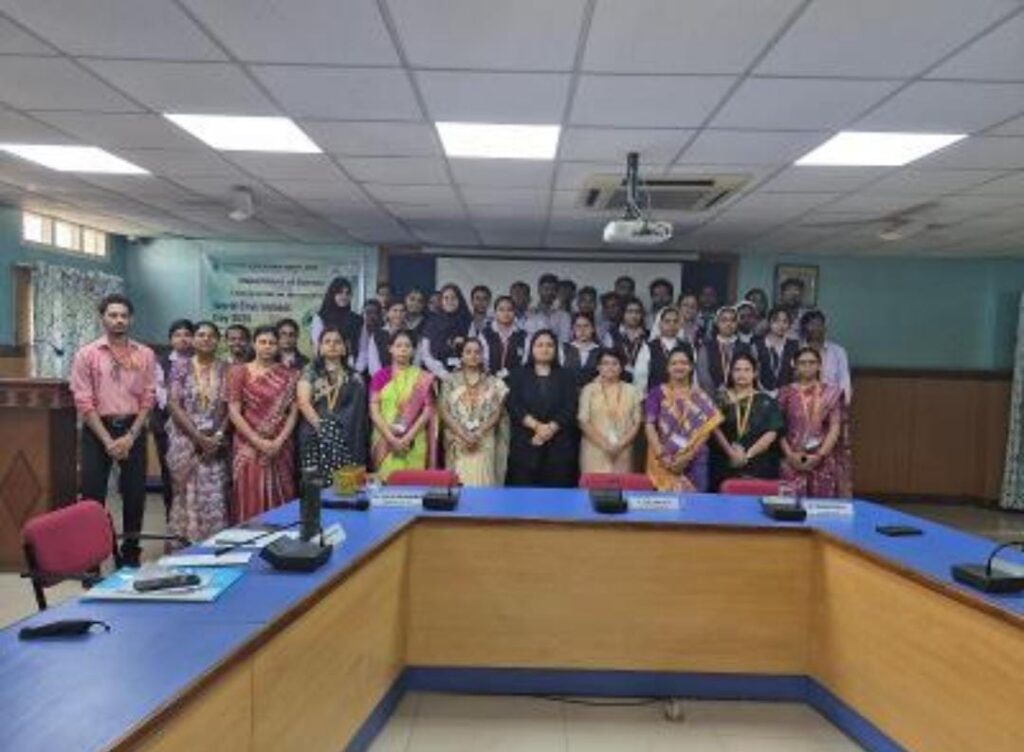
The Department of Science at The Bhopal School of Social Sciences (BSSS), Bhopal successfully organized two insightful expert lectures and plantation drive catalyzed and supported by the Department of Science and Technology (DST), NCSTC, and MPCST, Bhopal, on the theme “Sustainable Technology for Greener Environment: Minimize Waste, Maximise Life”, focusing on eco-conscious innovation and environmental responsibility.
The first lecture was delivered by Dr. Amit Dubey, Professor and Head, Department of Chemistry, MANIT Bhopal, who shared valuable insights on sustainable technologies and their role in reducing waste and maximizing resource efficiency. His session covered topics such as circular economy, green materials, and renewable energy applications, inspiring students and faculty to embrace environmentally responsible practices in science and technology.
The second lecture, titled “Green Reboot: Tech-Driven Forest and Waste-Free Future”, was delivered by Dr. Sakshi Bharadwaj, Founder of Junglevase, Bhopal. She presented innovative approaches combining technology with environmental conservation, emphasizing digital tools and green start-ups that promote afforestation and waste elimination.
Her talk encouraged youth participation in eco-entrepreneurship and tech-enabled environmental action. The department also organised plantation drive within the campus premises. The event witnessed enthusiastic participation from faculty members, students, and non-teaching staff, all united under the common cause of fostering a greener environment.
On this occasion, Dr. Fr. John P. J., Principal of BSSS, stated, “BSSS is committed to fostering a culture of environmental responsibility and innovation. These lectures not only promote scientific learning but also empower students to think critically about sustainability and become responsible global citizens.”
Both lectures received enthusiastic participation from students, faculty, and environmental enthusiasts. The event was coordinated by Dr. Vandana Yadav, Head of the Department of Science, who highlighted the importance of such knowledge-sharing platforms in shaping a sustainable and responsible future generation.
These sessions not only broadened the scientific perspectives of attendees but also reinforced the urgency of integrating sustainability into everyday life and professional practices.