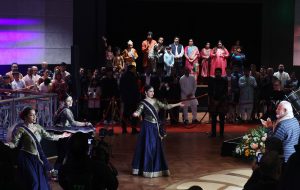
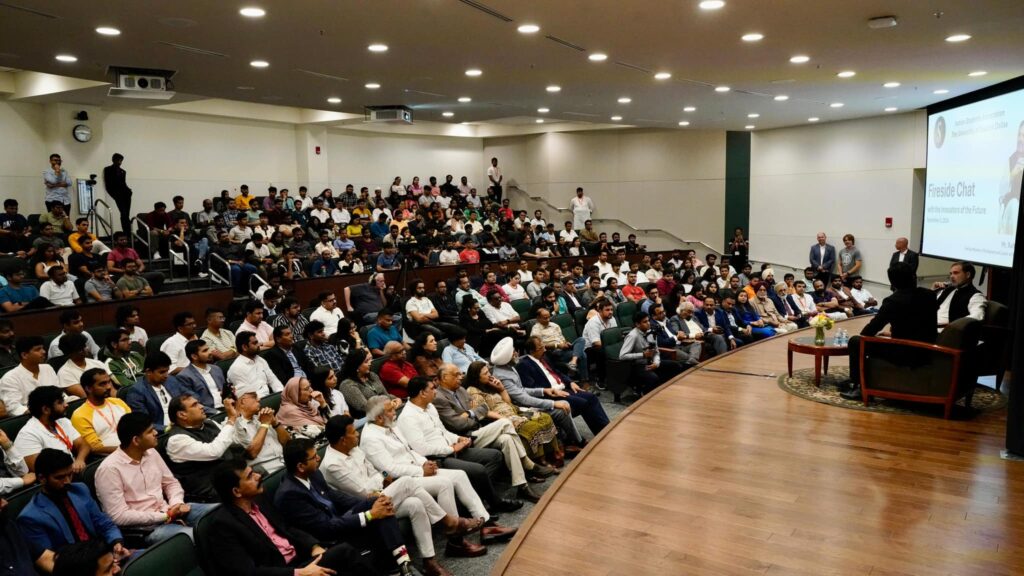
Rahul Gandhi, the Leader of the Opposition in the Lok Sabha, embarked on a three-day visit to the United States, starting with a stop in Dallas, Texas. At the University of Texas, he engaged with students and faculty members, discussing a wide range of topics such as India’s politics, economy, and the Bharat Jodo Yatra.
Describing the start of his US tour as “fantastic,” Rahul Gandhi expressed his enthusiasm for his interaction at the University of Texas. He said that the discussions were dynamic and engaging, covering significant topics such as India’s political landscape, the importance of production, and the need to respect skills. He also emphasized the vital role of youth and women in shaping the future of both India and the United States.
In his address to the Indian diaspora in Dallas, Rahul Gandhi stressed the importance of key values such as love, respect, and humility in Indian politics. He highlighted the need to embrace India’s rich diversity, which includes multiple languages, cultures, and traditions, while upholding the principles of the Indian Constitution.
Rahul Gandhi said- India has an employment problem. This is because we did not focus on production. Everything in India is Made in China. China has focused on production. That is why there are no employment problems in China.
He said there is no problem of employment in the whole world. There is a problem of employment in the West. There is in India as well, but not in China. Not in Vietnam. There is a reason for this. In 1950, America was considered the center of production. Things like TV, cars were made only here. After this, production started happening in China.
On being asked about poverty in India, Rahul Gandhi said- All the ports and all the defense contracts are given to only one or two people. That is why the condition of manufacturing is not good in India.
Rahul was asked that during the Bharat Jodo Yatra, he traveled 4 thousand kilometers. What changes did this bring?
He said that communication channels in India were closed. When we spoke in the Lok Sabha, it was not shown on television. The media did not show what we said. Everything was closed. We were not able to understand how to talk to the public. Then we thought that if the media was not taking us to the people, then we should go to them directly. That is why we did this yatra.
Rahul said, initially I had problems in my knees. I thought what kind of decision did I take to undertake this yatra, but after a few days it started to seem easy. This yatra changed my way of doing politics. The way of talking to people and understanding people changed. There was no love in politics. We showed by doing yatra that there can be love and talks of love in politics.
There were thousands of people in the yatra. Whatever they were saying to me, their words were coming out of my mouth. It seemed that the yatra was talking to me. Even the slogan of opening the shop of love in the market of hatred is not mine. During the yatra, a person came to me. He said to me – I know what you are doing. I know what you are doing. I asked what am I doing. So he said- you are opening a shop of love in the market of hatred.
During the journey, I came to know about the sentiments of the people. I came to know during the journey what our country wants and what and how our country feels.
Rahul stated that in India, the term “Devta” goes beyond just referring to God. It signifies a person who expresses externally what they feel internally. This concept also applies to politics. Leaders should prioritize the needs of the people over their personal agendas.
Rahul said a true leader reflects the sentiments of the public. To set aside one’s own ideas and focus on the people’s needs is to embody the essence of a Devta. Leaders such as Lord Ram, Buddha, and Mahatma Gandhi exemplified this quality. This distinction highlights the difference between leaders in India and those in Americ
Rahul was asked what do you think about AI. Will AI affect employment?
On this he said whenever new technology comes, it seems that jobs will be lost. When radio came, there were similar discussions. When calculator came, there were similar discussions. The same was said during the IT sector, but jobs are transformed with new technology. Some lose their jobs and some get jobs. Today computers have created many jobs.
Rahul was asked how should the education system be changed considering India’s population. What are your plans?
He said that some people claim there is a skill issue in the country. But he believes the real problem lies in the lack of respect afforded to skilled persons. Rahul pointed out that the education system in our country does not align with the business landscape, creating a significant gap between education and skill development. This gap needs to be addressed. He also noted that many vice-chancellors in universities are affiliated with the RSS, which he believes should not be the case.