
MP Chief Minister Dr. Mohan Yadav said that the country is progressing rapidly in all fields, including modern science. It is this scientific strength that enabled India to teach a lesson to its neighboring countries.
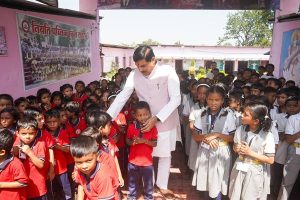
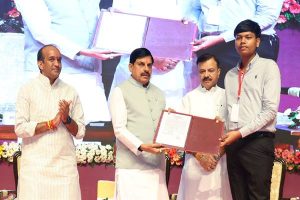
CM Dr. Yadav said this while addressing the inaugural session of the 52nd Children’s Science Exhibition-2025. He inaugurated the exhibition by lighting the lamp at the Regional Institute of Education (RIE), Shyamla Hills. He was welcomed by a robot developed by young scientists. He inspected the stalls put up by the students, interacted with them, and received detailed information on the robot and the star model created by the young innovators. The six-day exhibition, jointly organised by the National Council of Educational Research and Training and the School Education Department, will continue until November 23.
Support from NCERT and Participation of Experts
Director, NCERT, Professor Dinesh Prasad Saklani, stated that Chief Minister Dr. Yadav has been a consistent supporter of NCERT and has a deep interest in arts and science. He added that the Children’s Science Exhibition is a unique event, featuring projects and models selected from districts across the country.
The event was attended by Minister of Backward Classes & Minority Welfare Krishna Gaur, MLA Bhagwandas Sabnani, District President Ravindra Yati, School Education Secretary Dr. Sanjay Goyal, numerous science promoters, subject experts, teachers, young scientists, and curious students.
Exhibition Highlights
Approximately 900 students and teachers from 31 states and union territories showcased 240 science models and innovative projects addressing various societal challenges. The exhibition also features interactive sessions with scientists from MANIT, AISECT and IISER. The event aims to provide children with a platform to nurture their natural curiosity and creativity, and to help them experience science and mathematics in everyday life.
The main theme of the 2025 National Children’s Science Exhibition is ‘Science and Technology for a Sustainable Future’. Participating students from 230 schools have displayed stalls focused on food, health and hygiene, transportation and communication, natural farming, disaster management, mathematical modeling, computational thinking, waste management, and resource management.