On a rain-soaked morning in Mawsynram, Meghalaya, Banshailang Marbaniang stood watching dark clouds roll across the hills. The rain fell steadily, as it often does in the world’s wettest place. Yet it was not the weather that occupied his thoughts; it was the question that had followed him for years: how does a young man from one of the remotest corners of the country build a future when opportunities are as scarce as the rain is abundant?
For years, Marbaniang had watched friends and neighbours leave Mawsynram in search of work elsewhere. Resources were limited, and starting a business of his own seemed beyond reach. Financial constraints made the dream feel even more distant. Yet the thought refused to leave his mind. Surrounded by the region’s rich agricultural produce, he wondered whether these local resources could become the basis of an enterprise.
The turning point came when he got to know about the entrepreneurship training and skill development support being provided by the Indian Institute of Entrepreneurship (IIE) in Guwahati. IIE is a mentor institute under the Ministry of MSME’s ASPIRE scheme (A Scheme for Promotion of Innovation, Rural Industries and Entrepreneurship). It helps aspiring entrepreneurs acquire the skills, confidence and business knowledge needed to transform ideas into enterprises.
For Marbaniang, the training opened new possibilities. Armed with technical know-how and entrepreneurial skills, he established a food-processing enterprise that transformed locally available resources into economic opportunity, demonstrating that an opportunity can be created anywhere with guided support and skills.
Creating Opportunities Closer to Home
Marbaniang’s story reflects a larger transformation taking place across rural India.
Access to business development services, technology support, and enterprise promotion has largely remained concentrated in some urban centres. While rural India possessed talent, skills and resources, aspiring entrepreneurs often lacked the training, mentoring and institutional support needed to convert ideas into sustainable enterprises.
Recognising this gap, the Ministry of MSME launched the ASPIRE Scheme in 2015 to promote entrepreneurship and employment generation, particularly in rural and agro-based sectors.
Today, ASPIRE is centred around a growing network of Livelihood Business Incubators (LBIs) that help individuals move from skill acquisition to enterprise creation.
By providing training, mentoring and incubation support, ASPIRE enables aspiring entrepreneurs in agro-rural sectors and promotes innovations for strengthening the competitiveness in the MSME sector.
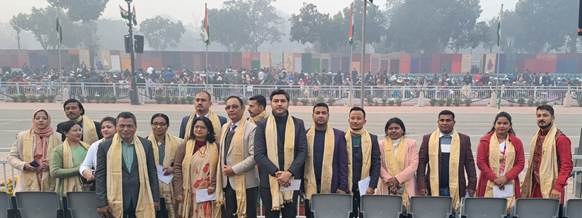
While the distance from the rain-soaked hills of Mawsynram to Kartavya Path is measured in kilometres, the journey from uncertainty to entrepreneurship is measured in opportunity. Through ASPIRE, thousands of Indians are gaining access to the support, skills and resources needed to transform aspirations into enterprises. By nurturing innovation and promoting entrepreneurship, ideas are transformed into businesses, skills into livelihoods and ambition into economic opportunity.
In doing so, ASPIRE is not only creating enterprises but also empowering communities, generating employment and contributing to a more inclusive and self-reliant India.